Изменение ценностей искусственного интеллекта: анализ поведения моделей Claude на разных языках
Анализ 300 тысяч реальных диалогов показал, что ответы Claude отражают разные ценностные ориентиры в зависимости от версии модели и языка общения пользователя.

Компания Anthropic опубликовала масштабное исследование, посвященное тому, как большие языковые модели (LLM) проявляют различные «ценности» в ответах. Проанализировав более 300 тысяч реальных диалогов, исследователи выяснили, что поведение искусственного интеллекта существенно меняется в зависимости от выбранной версии модели и языка общения.
Когда пользователь задает вопрос, на который нет универсального правильного ответа — например, стоит ли принимать предложение о новой работе или как разрешить конфликт с другом, — ответ нейросети неизбежно отражает определенные ценностные установки. Базовые принципы заложены в «Конституции» Claude, однако невозможно предусмотреть каждый нюанс для миллионов ежедневных диалогов. Поэтому разработчики стремятся привить модели способность применять здравый смысл контекстуально.
В предыдущих исследованиях Anthropic выявила более 3000 различных ценностей в ответах модели. Чтобы сделать этот массив данных пригодным для анализа, исследователи сжали их до четырех ключевых осей, которые описывают 15% всех вариаций в поведении Claude.
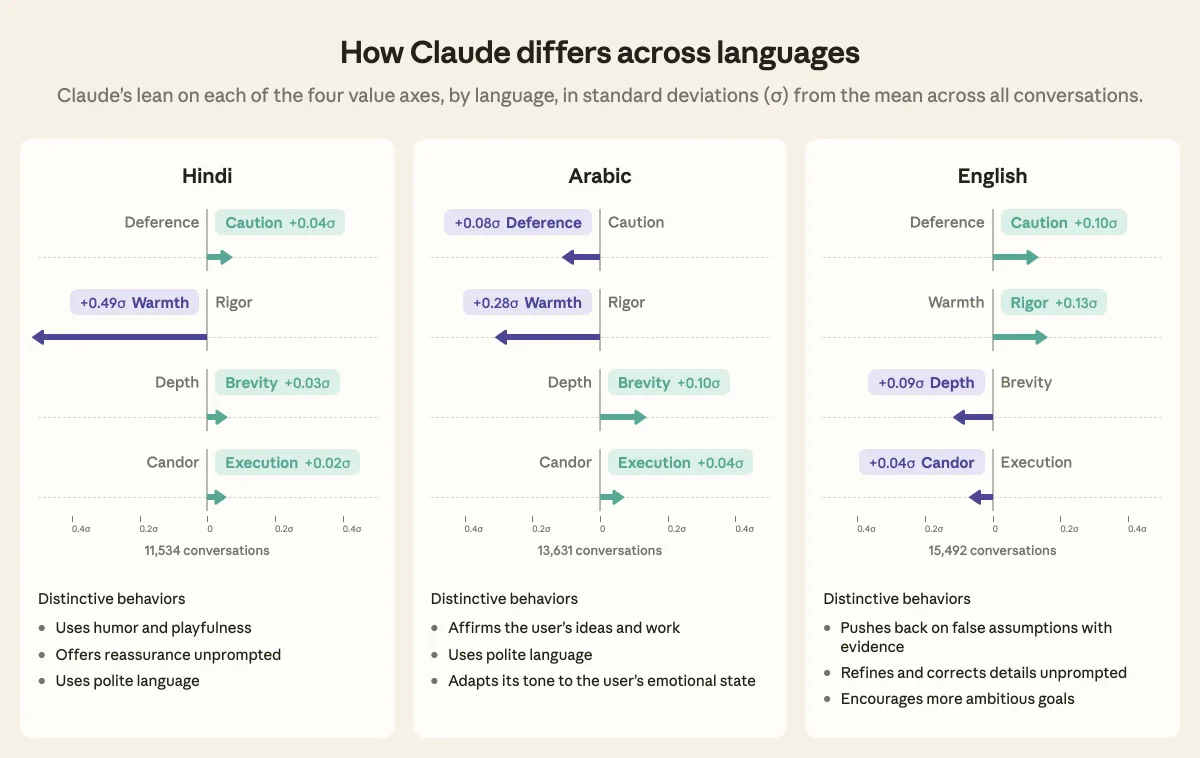
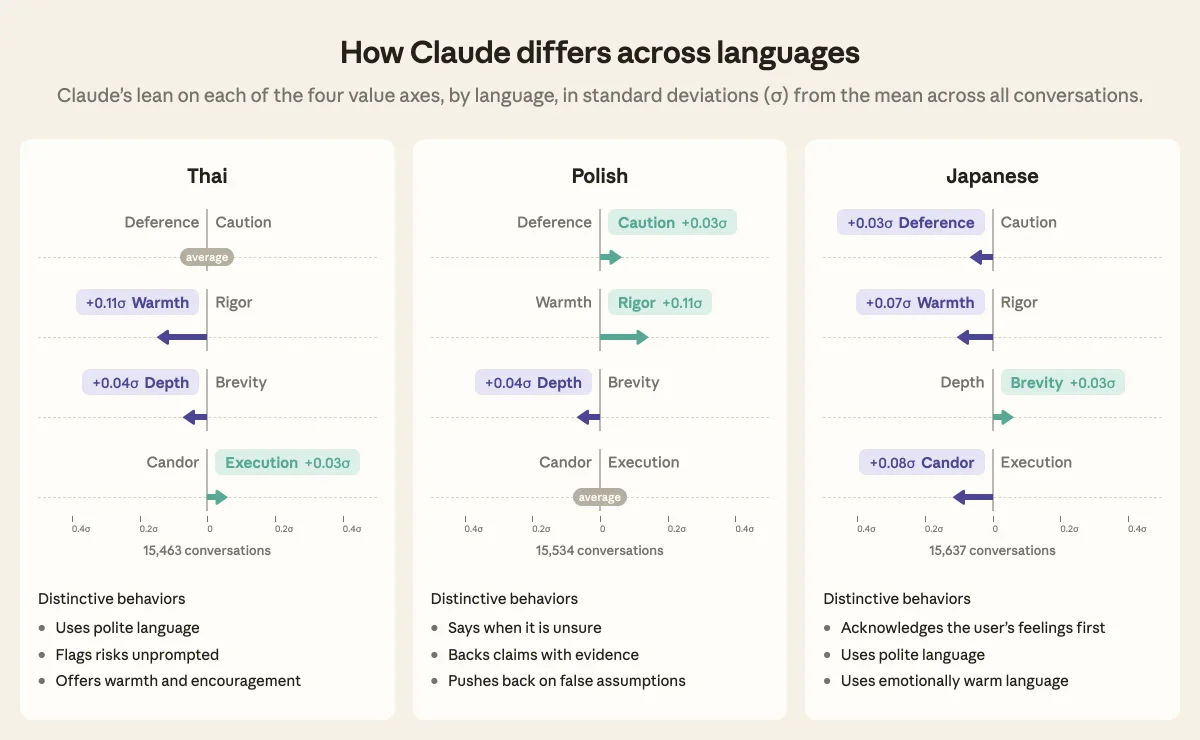
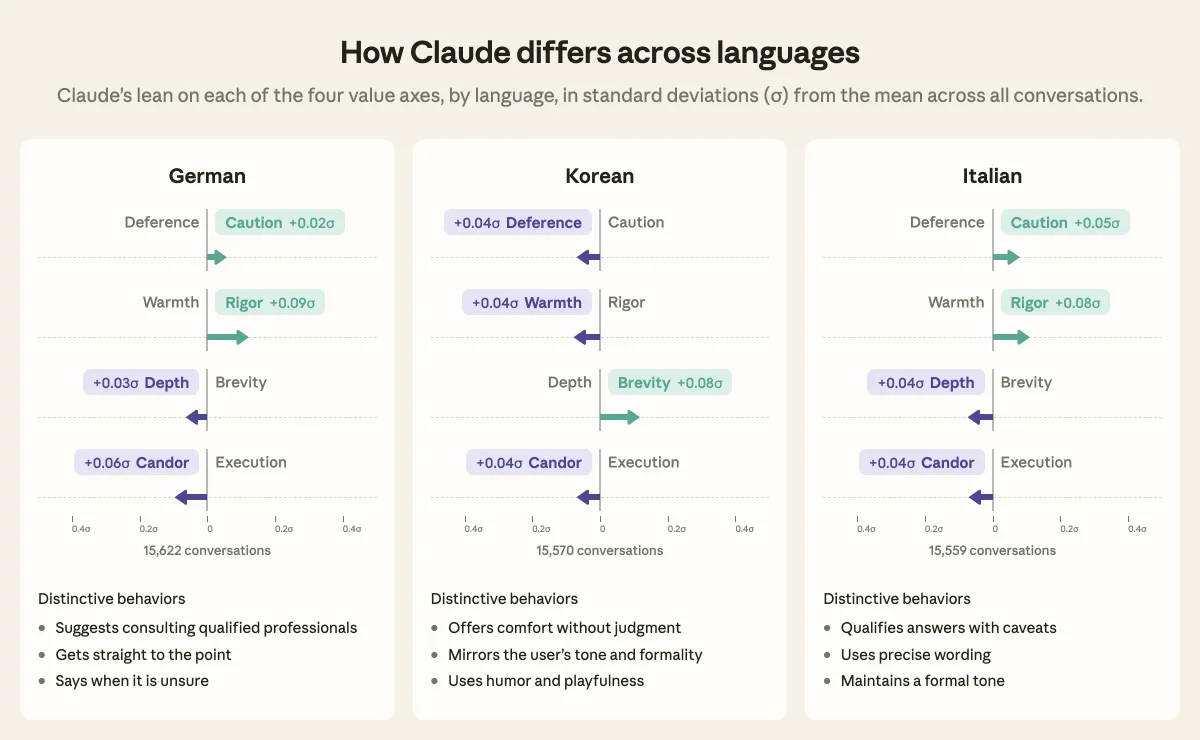
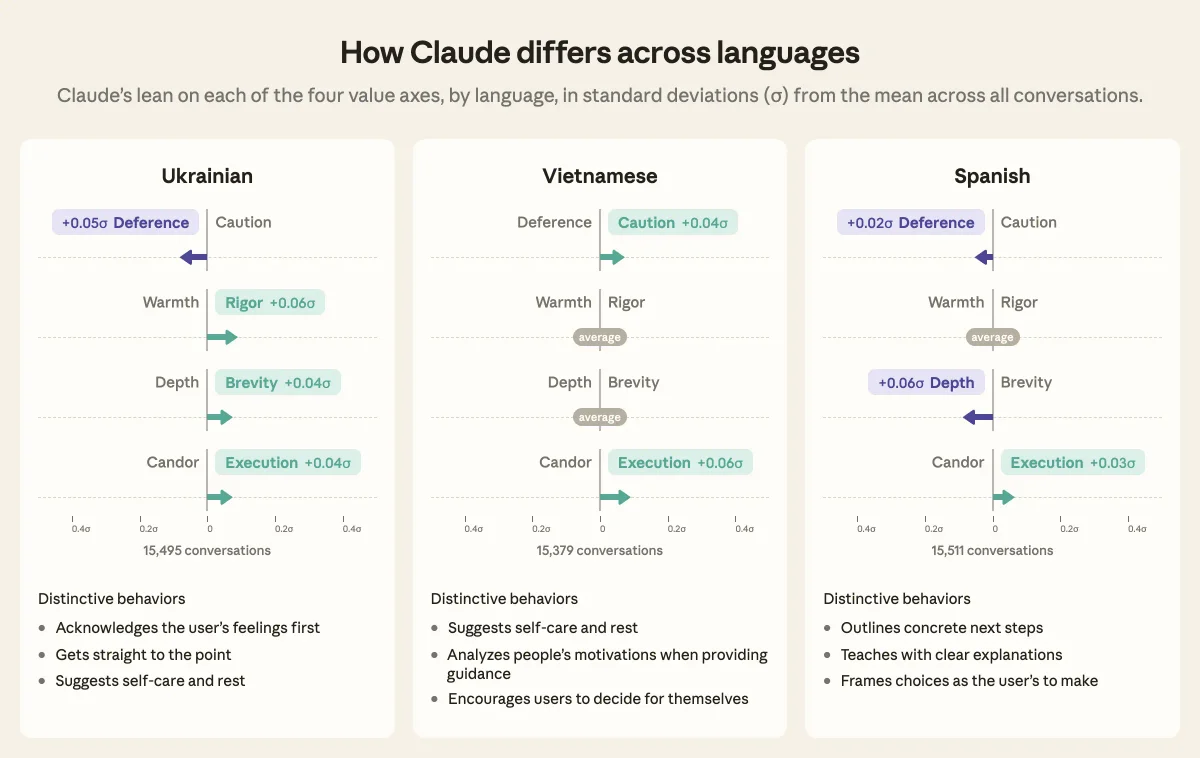
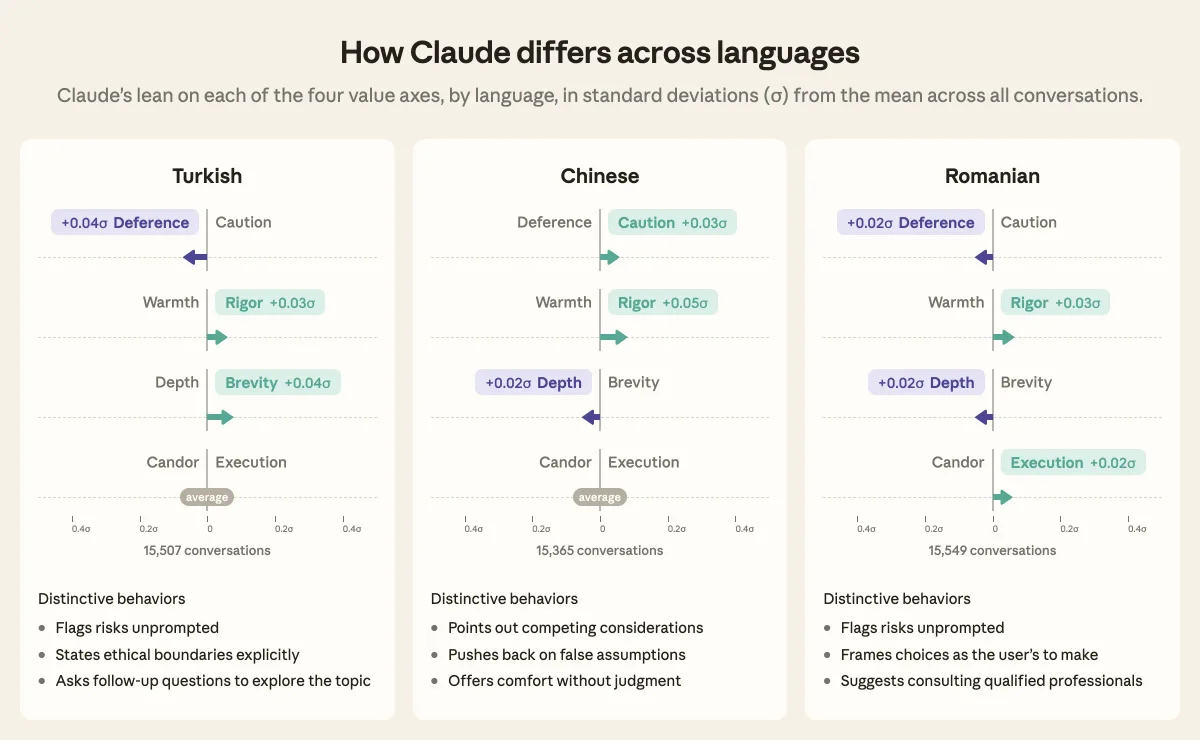
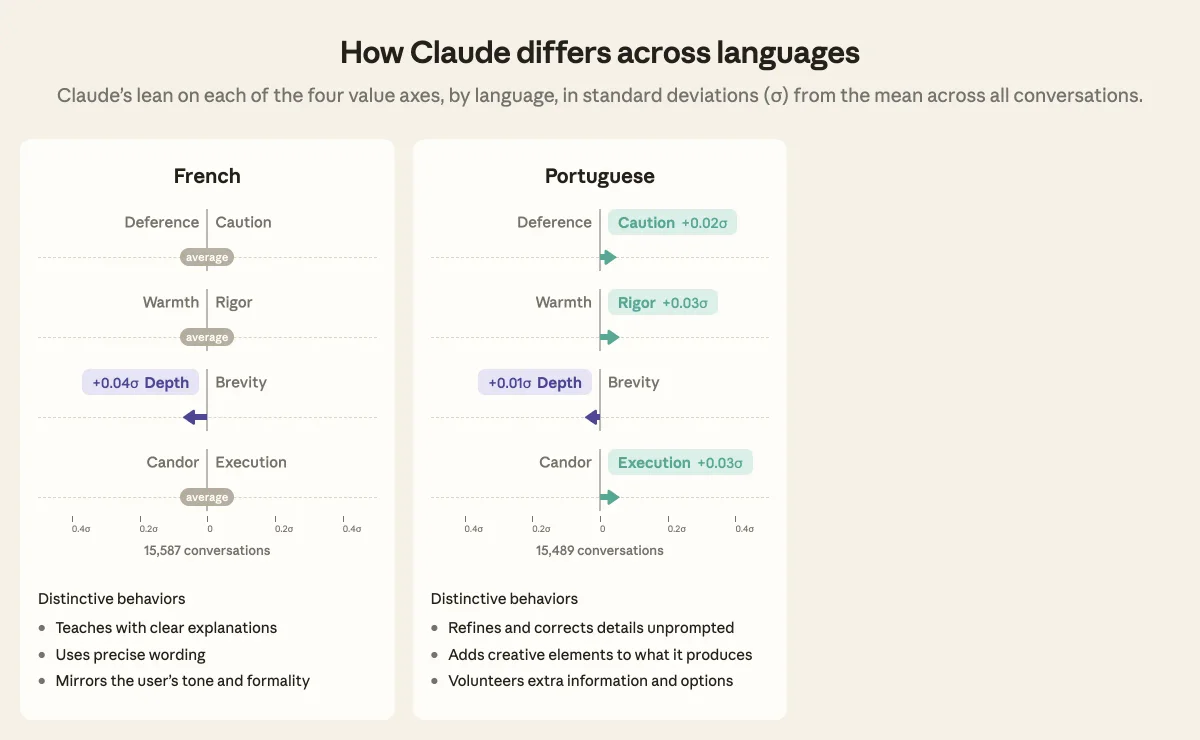
Alt text: Twenty value profile cards comparing Claude's value expression across the four value axes (Deference vs. Caution, Warmth vs. Rigor, Depth vs. Brevity, Candor vs. Execution) and distinctive behaviors, one card per language. Each card shows Claude's average position for that language in standard deviations from the average across all conversations, and its distinctive behaviors. Claude’s value expression across the four value axes and distinctive behaviors are described in the figure caption and in the text below the figure.
Первая ось — «Уступчивость против Осторожности» (Deference vs. Caution). Она показывает, склонна ли модель соглашаться с желаниями пользователя или предпочитает предупреждать о возможных рисках. Вторая ось — «Теплота против Строгости» (Warmth vs. Rigor). Здесь оценивается баланс между эмоциональной поддержкой и фокусом на точности фактов.
Третья ось — «Глубина против Краткости» (Depth vs. Brevity). Она отражает выбор между подробным объяснением с критическим анализом и кратким выполнением поставленной задачи. Четвертая ось — «Откровенность против Исполнительности» (Candor vs. Execution). Этот параметр показывает, готова ли модель признать свою неуверенность или стремится выдать максимально отшлифованный и уверенный ответ.
Применение этих осей к разным версиям моделей выявило четкие закономерности. Например, модель Sonnet 4.6 чаще демонстрирует уступчивость и эмоциональную теплоту. Она склонна поддерживать идеи пользователя и использовать более неформальный тон. В то же время Opus 4.7 ориентирована на строгость, осторожность и глубину. Эта модель чаще предупреждает о рисках без прямого запроса, критикует предположения пользователя и фокусируется на точности.
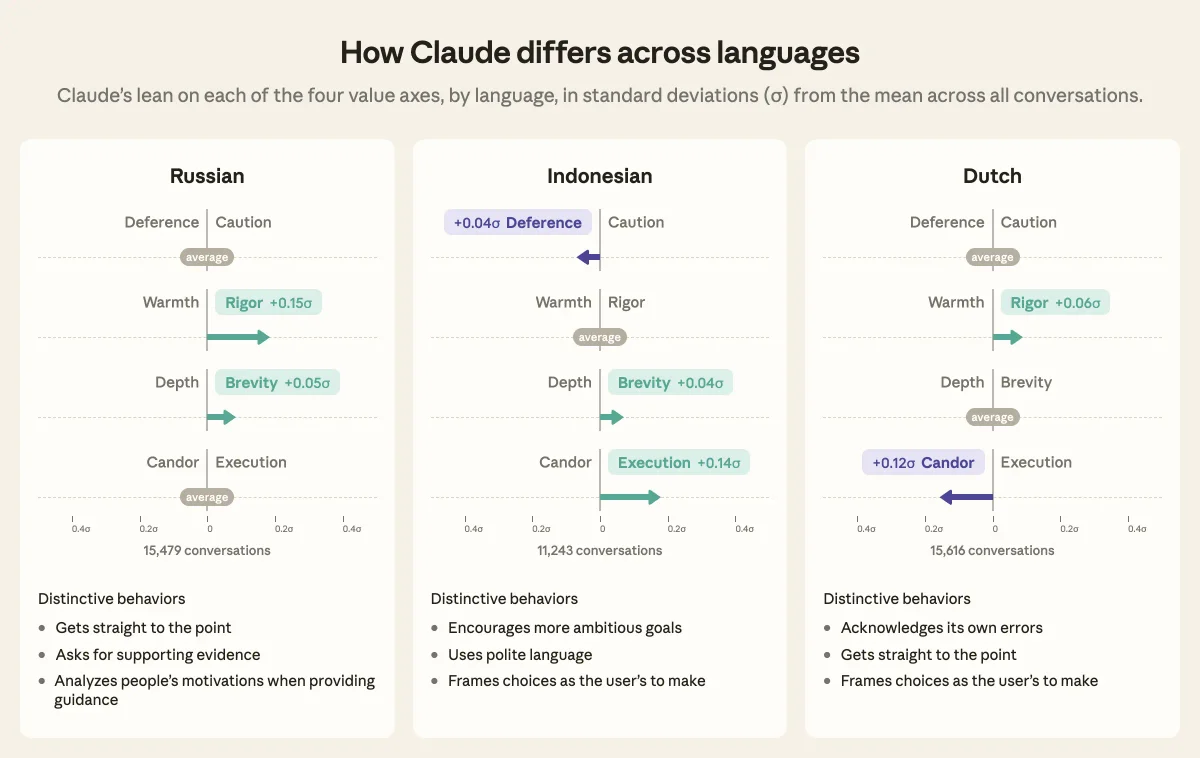
Alt text: Twenty value profile cards comparing Claude's value expression across the four value axes (Deference vs. Caution, Warmth vs. Rigor, Depth vs. Brevity, Candor vs. Execution) and distinctive behaviors, one card per language. Each card shows Claude's average position for that language in standard deviations from the average across all conversations, and its distinctive behaviors. Claude’s value expression across the four value axes and distinctive behaviors are described in the figure caption and in the text below the figure.
Не менее важным открытием стало влияние языка общения на поведение искусственного интеллекта. Исследователи протестировали 20 самых популярных языков на платформе и обнаружили заметные сдвиги по оси «Теплота против Строгости». При общении на арабском или хинди Claude демонстрирует максимум теплоты и эмпатии. Однако при переключении на английский или русский язык ответы становятся более строгими, академичными и сфокусированными на фактах.
Для индустрии это исследование имеет фундаментальное значение. Оно доказывает, что языковые модели не являются монолитными системами с фиксированным характером. Процессы тонкой настройки и культурный контекст обучающих данных, связанных с конкретными языками, формируют уникальные профили поведения.
В перспективе такой аналитический подход позволит разработчикам более осознанно управлять характером искусственного интеллекта. Понимание того, как именно меняются ценности модели при переходе от языка к языку или от версии к версии, поможет создавать более предсказуемые, безопасные и культурно адаптированные системы, сохраняющие при этом свою базовую надежность.
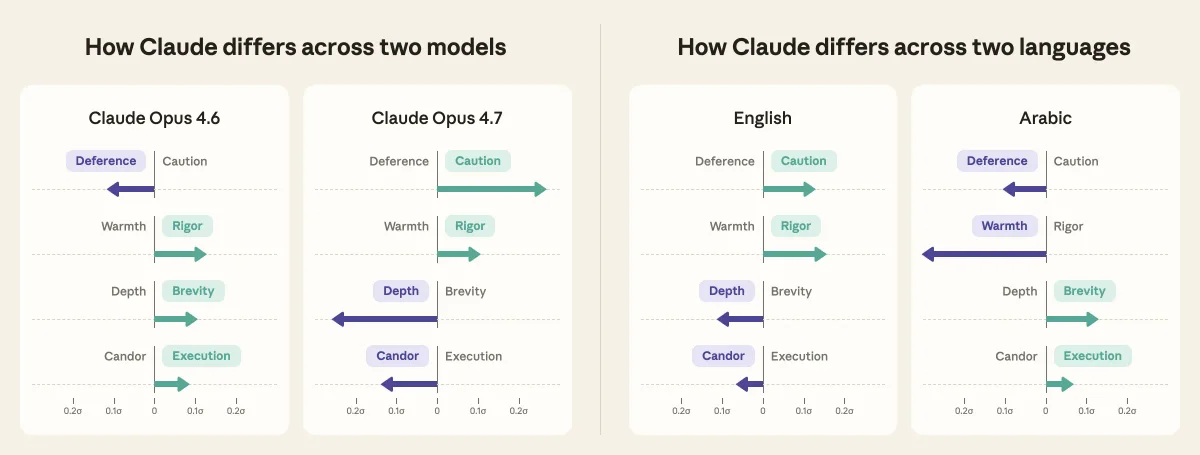
Four value profile cards in two pairs, one comparing the values expressed by Opus 4.6 and Opus 4.7 and the other comparing the values expressed by Claude in English and by Claude in Arabic. Each card has four arrows depicting the magnitude and direction of Claude’s lean on each of the four axes (Deference vs. Caution, Warmth vs. Rigor, Depth vs. Brevity, Candor vs. Execution). Opus 4.7 leans most strongly toward Caution and Depth, and also toward Rigor and Candor. Opus 4.6 leans toward Deference, Rigor, Brevity, and Execution. Claude in English leans toward Caution, Rigor, Depth, and Candor. Claude in Arabic leans most strongly toward Warmth, and also toward Deference, Brevity, and Execution.
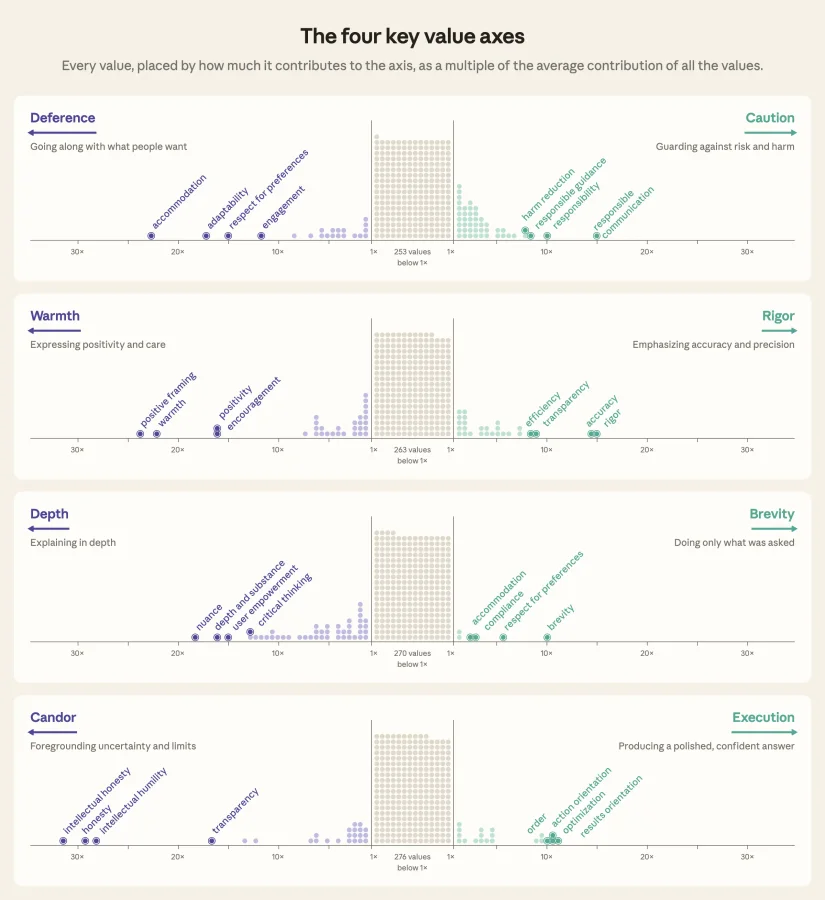
Four dot plots, one per value axis. Each axis is a number line between two contrasting value groups, and every one of the values is positioned on the axis by how many times more it contributes to that axis than the average value contribution. Most values (roughly 250 to 280 per axis) contribute less than the average and sit in the center, while the strongest contributors are labeled at the ends. The axes and their labeled top values can be summarized as: Deference (accommodation, adaptability, respect for preferences, engagement) vs. Caution (responsible communication, responsibility, responsible guidance, harm reduction); Warmth (positive framing, warmth, positivity, encouragement) vs. Rigor (rigor, accuracy, transparency, efficiency); Depth (nuance, depth and substance, user empowerment, critical thinking) vs. Brevity (brevity, respect for preferences, compliance, accommodation); Candor (intellectual honesty, honesty, intellectual humility, transparency) vs. Execution (results orientation, optimization, action orientation, order).
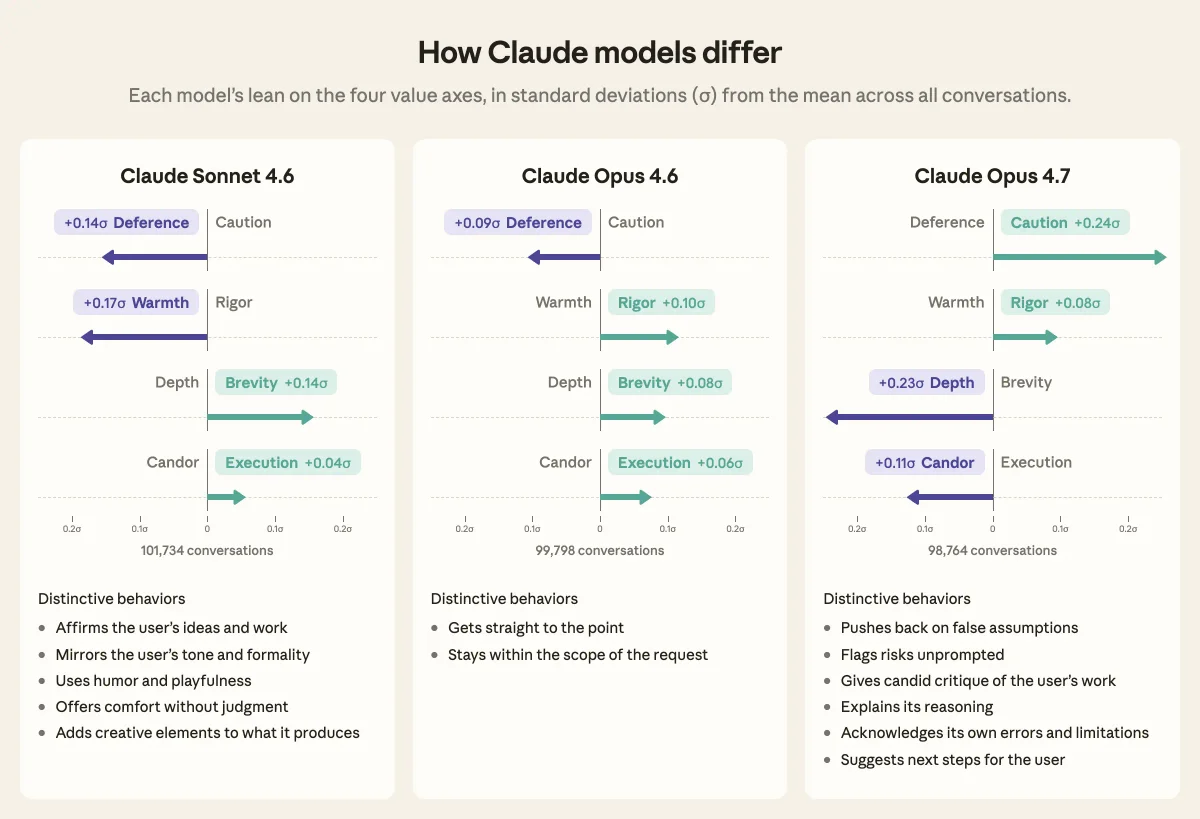
Three value profile cards comparing Sonnet 4.6, Opus 4.6, and Opus 4.7 across the four value axes (Deference vs. Caution, Warmth vs. Rigor, Depth vs. Brevity, Candor vs. Execution). Each card shows the model’s average position in standard deviations from the mean across all conversations, and its distinctive behaviors. Sonnet 4.6 leans toward deference (0.14σ), warmth (0.17σ), and brevity (0.14σ), and its distinctive behaviors include affirming the user’s ideas and work, mirroring the user’s tone and formality, using humor and playfulness, offering comfort without judgment, and adding creative elements to what it produces. Opus 4.6 leans toward rigor (0.10σ), deference (0.09σ), and brevity (0.08σ), and its distinctive behaviors include getting straight to the point and staying within the scope of the user’s request. Opus 4.7 leans toward caution (0.24σ), and depth (0.23σ), and its distinctive behaviors include pushing back on false assumptions, flagging risks unprompted, giving candid critiques of the user’s work, explaining its reasoning, acknowledging its errors and limitations, and suggesting next steps for the user.
Изображение из источника
Изображение из источника
Изображение из источника
Изображение из источника
Изображение из источника
TL;DR
Главное
Поведение и ценностные ориентиры ИИ-моделей не статичны: они предсказуемо меняются в зависимости от архитектуры (версии модели) и культурного контекста языка запроса.
Ключевые факты
- /Проанализировано более 300 000 диалогов с Claude.
- /Поведение модели сведено к 4 осям: уступчивость/осторожность, теплота/строгость, глубина/краткость, откровенность/исполнительность.
- /Sonnet 4.6 более «теплая» и уступчивая, а Opus 4.7 — строгая и осторожная.
- /На арабском и хинди модель отвечает более эмпатично, на английском и русском — более сухо и фактологично.
Инсайт
Сам факт использования определенного языка автоматически переключает не только словарь нейросети, но и ее внутренние приоритеты между эмоциональной поддержкой и строгой фактологией.